
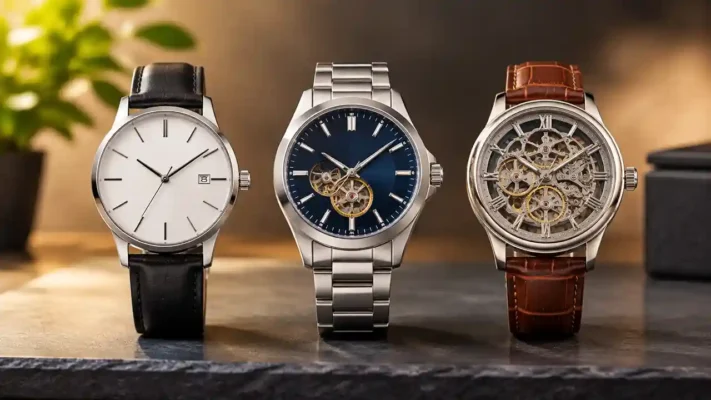
Automatic Vs Quartz Watch: Should You Buy Quartz, Automatic Or Manual Mechanical?
Your first-salary watch looks perfect. Then the salesperson shows you a similar automatic model that costs more—and explains that it does not need a battery. Is that a worthwhile upgrade, or another ownership responsibility?
The automatic vs quartz watch decision comes down to what you enjoy and what you can tolerate. Quartz usually wins on accuracy and convenience. Mechanical watches offer a different pleasure: owning a tiny working machine.
There is also a terminology trap. Automatic watches are mechanical watches. The real comparison is quartz versus automatic mechanical versus manual-wind mechanical. Here is how to choose without paying for features you do not actually want.
By Rohit Vyas
Quick Answer: Which Watch Movement Should You Buy?
Choose quartz for accurate, affordable, low-maintenance timekeeping. Choose automatic if you enjoy mechanical engineering and accept periodic servicing and resetting. Choose manual-wind mechanical if winding the watch yourself is part of the appeal. Solar quartz is worth considering for quartz convenience with fewer routine battery changes.
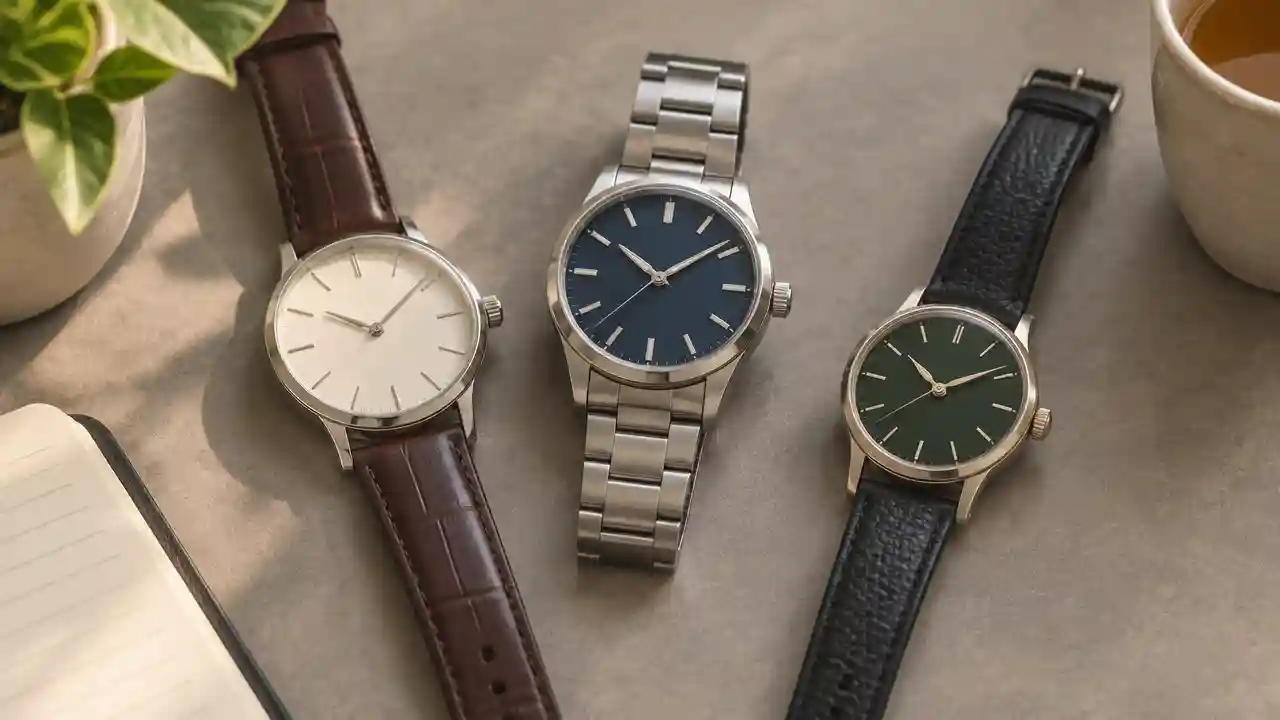
Quartz, Automatic And Mechanical Watch Meaning Explained
Quartz Watch Meaning: Electrically Powered Precision
A quartz watch uses electricity and a vibrating quartz crystal to regulate time. A circuit counts those vibrations and controls the display. In an analogue quartz watch, a motor drives the hands.
Most conventional quartz watches use a replaceable battery. Solar quartz watches use light to recharge an energy-storage cell. Both are quartz; solar describes how the watch obtains its power.
The practical benefit is simple: pick it up, put it on and leave. You generally do not need to wind it or reset it after a weekend in a drawer.
What Is An Automatic Watch?
An automatic watch is a self-winding mechanical watch. Wrist movement turns a weighted rotor inside the case. That rotor winds a mainspring, which stores the energy needed to run the movement.
A gear train, escapement and balance assembly control how that energy is released. An ordinary automatic movement does not use a battery.
However, “automatic” does not mean unlimited power. It needs enough movement to replenish its stored energy. Many automatics also support hand-winding, but not every movement does.
Mechanical Watch Meaning: A Mainspring, Not A Battery
Mechanical is the umbrella category for watches powered by a wound mainspring. It includes both automatic and manual-wind movements.
A manual-wind mechanical watch has no self-winding rotor. You wind its mainspring through the crown at the interval specified for that movement—often daily, though longer power reserves allow longer gaps.
Manual winding appeals to people who enjoy a small daily ritual. If that sounds like a chore, take the hint before buying.
Automatic Vs Quartz Watch: Side-By-Side Comparison
| Buying Factor | Quartz | Automatic Mechanical | Manual-Wind Mechanical |
|---|---|---|---|
| Power Source | Battery or rechargeable solar cell | Mainspring wound by a rotor; often also by hand | Mainspring wound by hand |
| Typical Accuracy | Many quality movements specify around ±15 seconds per month | Commonly several seconds per day; some allow more | Similar mechanical limitations; movement-specific |
| When Left Unworn | Runs while electrical power remains | Stops after stored power runs out | Stops unless wound before power runs out |
| Routine Attention | Battery replacement or adequate light for solar | Wearing, occasional winding and resetting | Regular winding and occasional resetting |
| Ownership Cost | Usually lowest for comparable watches | Usually higher due to mechanical servicing | Also needs mechanical servicing |
| Main Appeal | Precision and convenience | Mechanical character with self-winding | Direct, hands-on interaction |
| Main Compromise | Less mechanical involvement | Lower precision and more upkeep than quartz | Winding is your responsibility |
These are broad comparisons, not specifications for every watch. Check the exact movement’s accuracy tolerance, power reserve and maintenance instructions before ordering.
Accuracy: Why The Cheaper Watch May Keep Better Time
A higher price does not automatically buy better timekeeping. A good quartz watch can be more accurate than a much more expensive mechanical watch.
For perspective, a watch gaining five seconds daily would gain roughly two and a half minutes over 30 days if that rate stayed constant. A quartz movement rated at ±15 seconds per month operates within a much tighter tolerance.
Mechanical accuracy changes with movement quality, adjustment, temperature, position and wearing habits. Magnetism can also affect susceptible movements.
Accuracy and quality are different things. An automatic may have beautiful finishing, a comfortable bracelet and a well-engineered movement while still needing more frequent time correction.
Also, do not identify movements by seconds-hand motion alone. Most conventional quartz watches tick once per second, while mechanical hands usually advance in several small steps. Exceptions exist, so a smooth-looking hand is not proof of an automatic—or of authenticity.
Power Reserve And Winding: What Daily Ownership Feels Like
Power reserve means how long a mechanical watch can run from a fully wound mainspring without receiving more energy.
For example, if a watch is specified to have a 40-hour reserve, leaving it off from Friday evening until Monday morning can let it stop. This is an illustration, not a universal automatic-watch specification.
A stopped automatic is normally not broken. Restart it using the manufacturer’s instructions, then set the time and date. If it supports hand-winding, that is often the simplest starting method. Do not shake it violently.
A desk-based routine may not fully wind every automatic. Your movement level and the winding system both matter; wearing it for a few hours does not guarantee a full reserve.
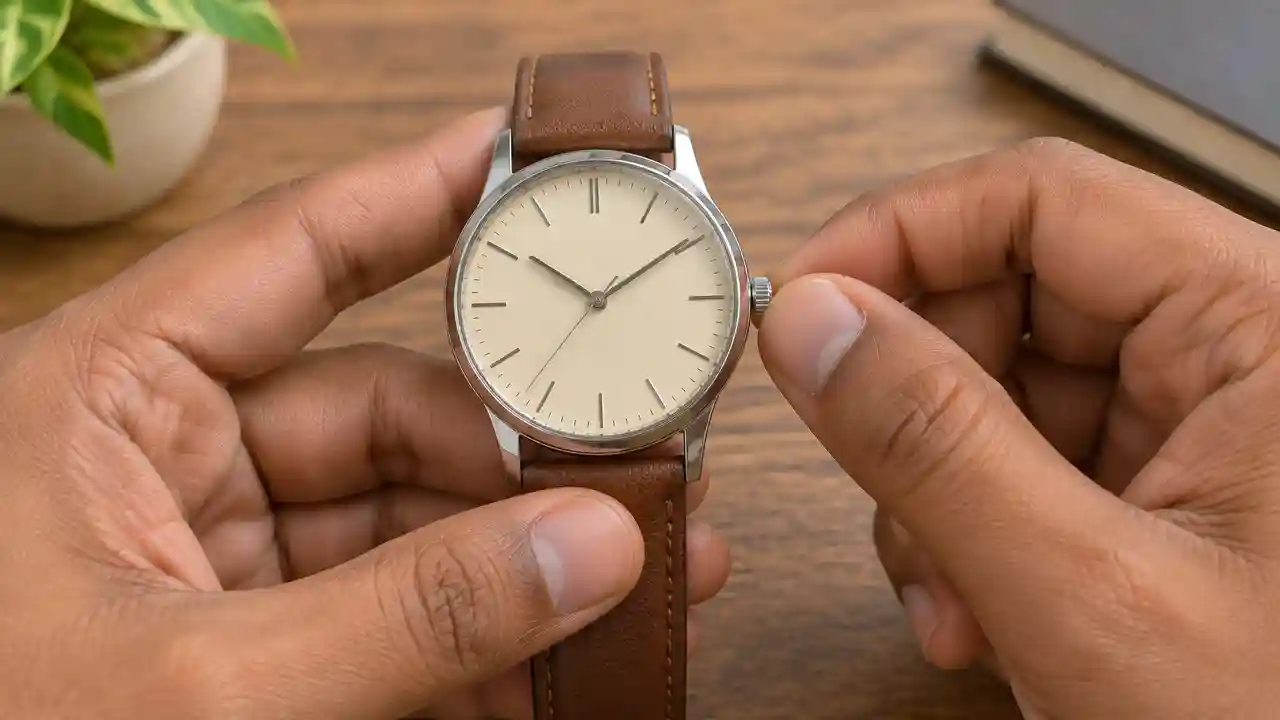
Simple Winding Habits That Prevent Trouble
- Remove the watch before winding to avoid putting sideways pressure on the crown.
- On a manual-wind watch, stop at firm resistance. Never force the crown.
- Follow the instructions for screw-down crowns and secure them afterwards.
- Check date-setting restrictions; many movements prohibit quick-setting the date during part of the overnight changeover period.
A watch winder is optional, not essential. For a straightforward automatic, letting it stop and resetting it before wear is usually perfectly reasonable.
Maintenance And Total Ownership Cost In India
The price tag is only the first expense. Ask for service estimates in ₹ before buying, particularly if the watch needs to be sent outside your city.
| Expense | Quartz | Automatic Or Manual Mechanical |
|---|---|---|
| Power-Related Upkeep | Conventional batteries often last about one to five years; exceptions exist | No battery replacement, but winding is required |
| Professional Maintenance | Battery work, seals and repairs as needed | Cleaning, lubrication, adjustment and worn-part replacement |
| Water Resistance | Seal checks and pressure testing when appropriate | Same requirement; movement type offers no exemption |
| Straps And Bracelets | Wear-related replacements or repairs | Similar costs for comparable materials |
| Optional Accessories | No winder needed | Winder unnecessary for most buyers |
A frequently quoted mechanical service interval is three to five years, but the manufacturer’s guidance takes priority. Some specify longer intervals. Unusual timekeeping, reduced reserve or moisture inside the watch calls for attention sooner.
Solar quartz reduces routine battery changes, but its rechargeable cell can eventually age. It still needs appropriate light exposure, healthy seals and occasional professional attention.
Both quartz and mechanical watches can last decades with suitable care and repair support. Neither lasts forever without maintenance. Parts availability and competent local service matter more than an “heirloom” sales pitch.
Which Movement Fits Your Lifestyle?
| Your Situation | Best Starting Point | Why |
|---|---|---|
| College Or First Job | Quartz | Predictable timekeeping and usually lower ownership costs |
| Daily Office Wear | Quartz Or Automatic | Choose convenience or mechanical enjoyment |
| Occasional Weddings And Functions | Quartz | Less resetting after weeks in storage |
| Frequent Travel | Quartz Or Solar Quartz | Reliable grab-and-go use; time-zone features depend on the model |
| Gym Or Physical Work | Purpose-Built Sports Quartz | Prioritise shock protection, comfort and suitable water resistance |
| Building A Watch Collection | Automatic Or Manual-Wind | Different movements add mechanical interest |
| Gift For A Non-Enthusiast | Quartz Or Solar Quartz | Fewer ownership instructions for the recipient |
A groom buying a watch mainly for his wedding and anniversaries may find quartz more satisfying than an automatic that needs setting every time. An enthusiast buying a daily companion may happily accept that same inconvenience.
Manual-wind makes sense when the winding ritual is genuinely enjoyable. It is less convincing as a surprise gift for someone who simply wants to know the time.
Options Worth Comparing Before You Buy
Basic Quartz: The Sensible Starting Point
Explore quartz ranges from brands such as Casio, Timex, Citizen and Seiko. Compare individual watches rather than assuming every model from a familiar brand offers the same materials or features.
Pros: Accurate, convenient and usually economical to maintain. Cons: Conventional models need battery changes, and the movement may offer little visual interest.
Best for: Students, strict schedules, occasional wear and buyers who want one dependable watch.
Solar Quartz: Practicality With Fewer Battery Changes
Citizen Eco-Drive and other solar quartz ranges deserve attention if you want accuracy without routine disposable-battery replacement.
Pros: Quartz precision and convenient charging through light. Cons: Often a higher initial price than basic quartz; long periods in darkness and eventual cell ageing still matter.
Best for: Regular wearers and travellers who prefer minimal intervention.
Automatic: Buy It For The Experience
Seiko 5 and Orient automatic ranges are familiar starting points. Tissot and other established mechanical-watch brands offer further options as your budget increases. Confirm Indian availability, warranty support and the exact reference’s features.
Pros: Mechanical interest and self-winding convenience. Cons: More involved servicing, variable precision and resetting after storage.
Best for: Buyers who already understand the compromises and still want the movement.
Manual-Wind: A Deliberate Enthusiast Choice
Buy manual-wind because you enjoy its operation or a particular design—not because “mechanical” sounds superior. With vintage watches, condition and repairability need especially careful assessment.
Pros: Satisfying interaction; some designs can be slim without a rotor. Cons: Regular winding and the same broad servicing obligations as other mechanical watches.
Best for: Enthusiasts comfortable with a hands-on routine.
Compare Similar Designs Before Paying The Premium
The Tissot PRX range illustrates why comparing quartz and automatic versions can help. Check comparable references and sizes, then examine what changes besides the movement: dial, thickness, weight and specifications may differ.
No verified current Indian prices are supplied here, so check the latest authorised-retailer quotes. Ask yourself: Would I still pay the difference knowing the automatic is usually less accurate? If yes, you are buying it for the right reason.
What To Check Beyond The Movement
- Fit: Measure your wrist and try the watch on. There is no single “Indian wrist size”. Case diameter, lug-to-lug length and thickness all affect comfort; the lugs should not overhang.
- Crystal: Sapphire generally resists scratches better than mineral glass, but neither is indestructible.
- Strap: Leather suits office and wedding wear but dislikes repeated soaking. Steel and suitable rubber are practical in heat and monsoons. Nylon can stay damp after getting wet.
- Readability: Check contrast, reflections and whether you can read the hands quickly.
- Durability: Look at case construction, shock protection and magnetic resistance. “Automatic” is not a toughness rating.
Water Resistance Is Not A Literal Swimming Depth
As a conservative starting point, treat 30m as splash protection. At 50m, check the maker’s specific swimming guidance rather than assuming suitability. A 100m rating is commonly suitable for swimming when the manufacturer permits it and seals are sound. A 200m rating alone does not establish dive-watch suitability.
Avoid hot showers and saunas, and do not operate crowns underwater unless explicitly allowed. Water resistance deteriorates as seals age.
Warranty, Sellers And Resale
For an Indian purchase, verify the seller’s authorisation, invoice, warranty validity, service arrangements and return policy. A marketplace listing does not automatically mean manufacturer-backed coverage. Grey-market savings may come with seller-only warranties or difficult repairs.
Avoid “first copy” watches. Packaging and a sweeping seconds hand do not establish authenticity. For expensive pre-owned purchases, seek independent authentication and check condition and service history.
Do not justify stretching to ₹1 lakh or beyond through assumed resale gains. Some mechanical models attract collectors, but most watches are not guaranteed investments.
A Simple Buying Decision
If your budget is tight, prioritise a comfortable, readable quartz watch from a dependable seller. With more room to spend, consider solar quartz before assuming automatic is the necessary upgrade.
Choose automatic when the movement itself excites you and the service estimate feels manageable. Choose manual-wind when you actively want the winding ritual.
Shortlist two watches, try both on and request written warranty and service details. Spend on the one you will enjoy wearing—not the movement label you feel obliged to own.
Frequently Asked Questions
Is An Automatic Watch Better Than Quartz?
Not universally. Quartz generally offers better accuracy and convenience. Automatic suits buyers who value mechanical construction enough to accept more upkeep and occasional resetting.
Are Automatic And Mechanical Watches The Same?
Automatic watches belong to the mechanical category. Mechanical watches can be either self-winding automatics or manual-wind watches that need winding through the crown.
Will An Automatic Watch Stop If I Do Not Wear It?
Yes, once its power reserve runs out. Restart and set it according to its instructions. Stopping after an extended period unworn is normal.
Does A Solar Watch Have A Battery?
Solar quartz watches generally store energy in a rechargeable cell. Light replenishes that energy, reducing routine battery changes, but the cell can eventually need replacement.
How Often Should An Automatic Watch Be Serviced?
Three to five years is a commonly quoted guideline, not a universal schedule. Follow the manufacturer’s recommendation and seek help sooner for moisture, unusual timekeeping or winding problems.
Do I Need A Watch Winder?
Usually not. Most straightforward automatics can stop safely and be reset before wearing. A winder is an optional convenience, particularly for complicated calendar watches.
Which Movement Is Best For A Wedding Gift?
Quartz or solar quartz is usually safest for a non-enthusiast. An automatic or manual-wind watch can be meaningful when the recipient appreciates mechanical watches and understands their care.
Conclusion: Choose The Ownership Experience You Want
The automatic vs quartz watch choice is not a ladder from basic to superior. Quartz is the practical default, solar quartz adds charging convenience, automatic offers self-winding mechanical enjoyment, and manual-wind adds a deliberate daily ritual.
For most first-time buyers in India, a well-supported quartz watch is an excellent purchase. Buy mechanical when you want its character—not because you expect better precision. Try your shortlist on, check the full ownership cost and choose the watch that fits your routine.